
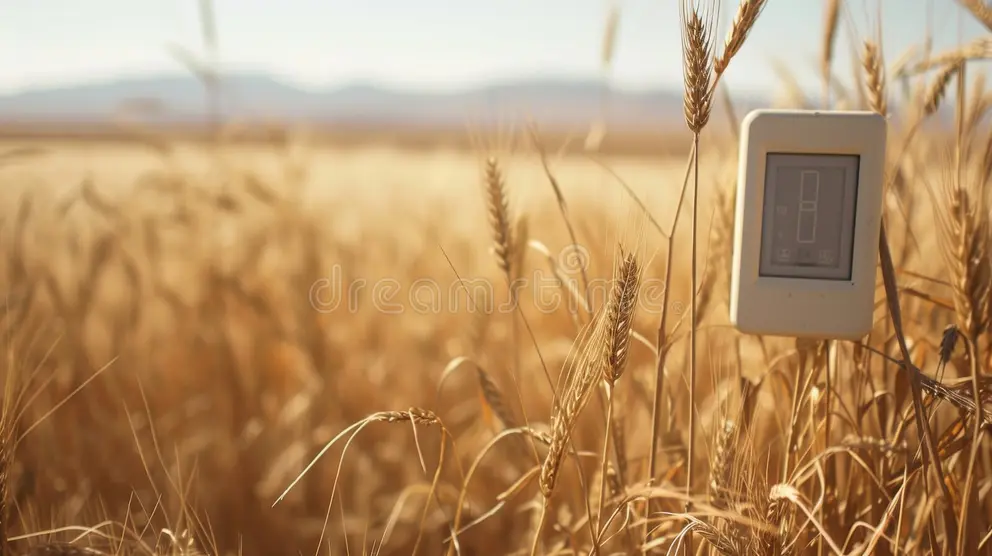
Smart Farming: How Sensors and AI Are Changing Modern Agriculture
Farming has always depended on observation.
Farmers watch the sky, inspect their crops, feel the soil, monitor water, and respond to changing field conditions.
Technology is now adding another layer to that process.
Smart farming combines sensors, connected devices, data, automation, and artificial intelligence to help farmers understand what is happening in their fields.
## What Is Smart Farming?
Smart farming means using digital technology to collect and interpret information about agricultural conditions.
Depending on the farm, this may include:
- Soil moisture sensors
- Temperature sensors
- Humidity sensors
- Weather stations
- Crop images
- GPS
- Satellite data
- IoT devices
- AI-based analysis
The objective is simple:
Use better information to make better farming decisions.
## Why Sensors Matter
Many important changes in a field are difficult to observe continuously.
Soil moisture can change during the day.
Temperature can rise quickly.
Humidity can affect disease conditions.
A sensor can measure these variables and provide data that would otherwise be difficult to collect regularly.
## Solar-Powered Agricultural Sensors
A field sensor can be designed to operate using a small solar panel.
A weatherproof enclosure can protect electronic components from outdoor conditions while probes measure conditions in or near the soil.
Such a system can potentially operate for long periods with limited manual intervention.
## Where AI Comes In
Sensors produce data.
AI can help interpret that data.
For example, a system could combine soil information with weather conditions and crop information to identify patterns that may require attention.
AI can also analyze crop images and support plant-health screening.
This creates a broader workflow:
Sensors → Data → AI analysis → Information → Farmer decision
## Technology Should Remain Practical
Smart farming does not necessarily mean expensive machinery or fully automated farms.
A smallholder farmer can benefit from simple technologies too.
A single soil sensor, a smartphone camera, or a weather information service can provide useful information.
The best technology is not always the most complicated.
It is the technology that solves a real problem.
## The Farmer Remains in Control
Smart farming should support farmers rather than remove them from the decision-making process.
A sensor can tell us that soil moisture has changed.
AI can identify a pattern.
But the farmer understands the field context.
That human knowledge remains extremely important.
## The Future of Connected Agriculture
As agricultural technology becomes more accessible, farms can become increasingly data-driven.
Crop images, soil measurements, weather information, and field observations can work together.
The result is a more connected approach to agriculture.
Smart farming is therefore not simply about machines.
It is about making information available when it can be useful.
And sometimes, better information can lead to a better decision.

0 Comments
No comments yet. Be the first to comment!