
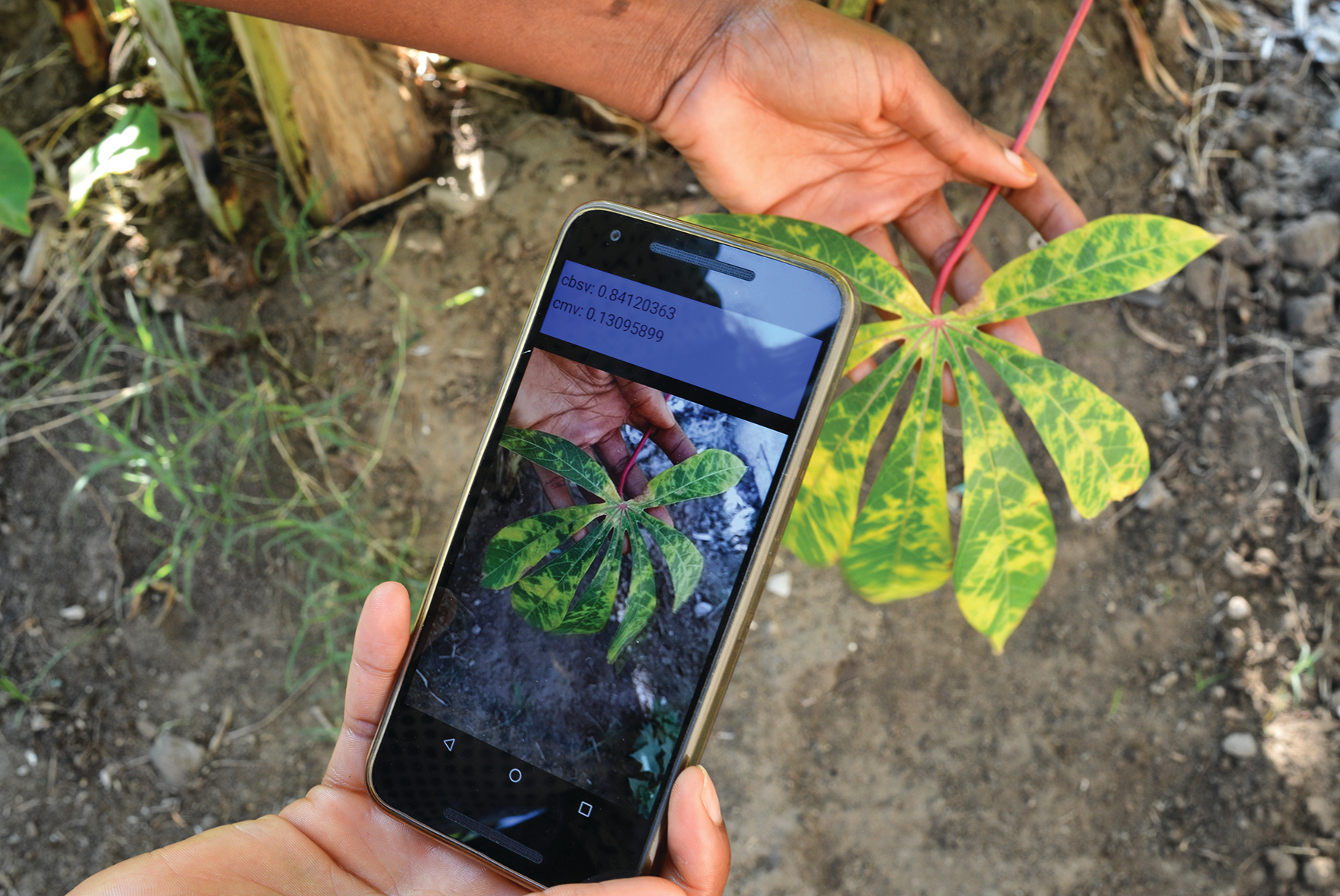
How AI Detects Crop Diseases From a Single Leaf Photo
A farmer notices something unusual on a crop leaf.
There may be brown spots, yellowing, dark lesions, unusual patterns, or damaged tissue.
The first question is simple:
"What is happening to my crop?"
Artificial intelligence can help provide an initial answer by analyzing a photograph of the affected leaf.
But how does AI actually look at a photograph and identify a possible crop disease?
## From Photograph to Prediction
AI crop-disease detection uses computer vision, a branch of artificial intelligence that enables computers to analyze images.
The basic workflow is:
Leaf photograph → Image preparation → AI model → Pattern analysis → Prediction → Guidance
The farmer does not need to understand the mathematics behind the model.
The system processes the image and searches for visual patterns associated with the conditions it has been trained to recognize.
## Image Preparation
Before an image reaches the AI model, it may need to be resized and normalized.
Machine-learning models generally expect images in a specific format and size.
Image preprocessing helps convert a smartphone photograph into a format suitable for model analysis.
## Looking for Visual Patterns
A trained image model can learn patterns associated with different plant conditions.
These may include:
- Leaf colour
- Spots
- Lesions
- Texture
- Shape
- Discoloration
- Necrotic areas
- Disease-specific visual characteristics
The model does not examine the plant like a human agronomist.
Instead, it converts visual information into numerical representations and calculates which learned category best matches the image.
## Prediction and Confidence
The model can produce a predicted class together with a confidence score.
A farmer-facing system can translate that technical output into understandable information.
For example:
Crop: Rice
Possible condition: Crop disease
Confidence: AI confidence score
Visible symptoms: Brown lesions and yellowing
Next step: Inspect nearby plants and confirm the result before treatment.
A confidence score is useful because it communicates how strongly the model supports its prediction.
## Real Fields Are Complicated
Agricultural photographs can contain many sources of variation.
The leaf may be:
- Wet
- Partially damaged
- In shadow
- Overexposed
- Surrounded by other plants
- Partially hidden
- Photographed from an unusual angle
These factors can affect AI performance.
A model that performs well on clean laboratory images may behave differently when presented with photographs taken in real fields.
This is why real-world validation is essential.
## AI Is a Decision-Support Tool
An AI prediction should not automatically be treated as a confirmed agricultural diagnosis.
Farmers should consider other information, including:
- Crop variety
- Crop age
- Weather
- Soil conditions
- Irrigation
- Field history
- Nearby affected plants
Professional agricultural advice can also be important before applying treatments.
## The Future of Crop Diagnosis
Image-based disease detection is only one part of agricultural AI.
Future systems can combine:
Leaf images + Soil data + Weather + Crop information + Field history
This can provide a more complete picture of crop health.
The goal is not to replace the farmer.
The goal is to provide useful information at the right time.
A single photograph can therefore become more than an image.
It can become the starting point for a smarter agricultural decision.

0 Comments
No comments yet. Be the first to comment!